Practice3 min read
AI receptionist for veterinary clinics
During an operation nobody answers the phone. Katti, the AI receptionist, takes the call and books the visit.
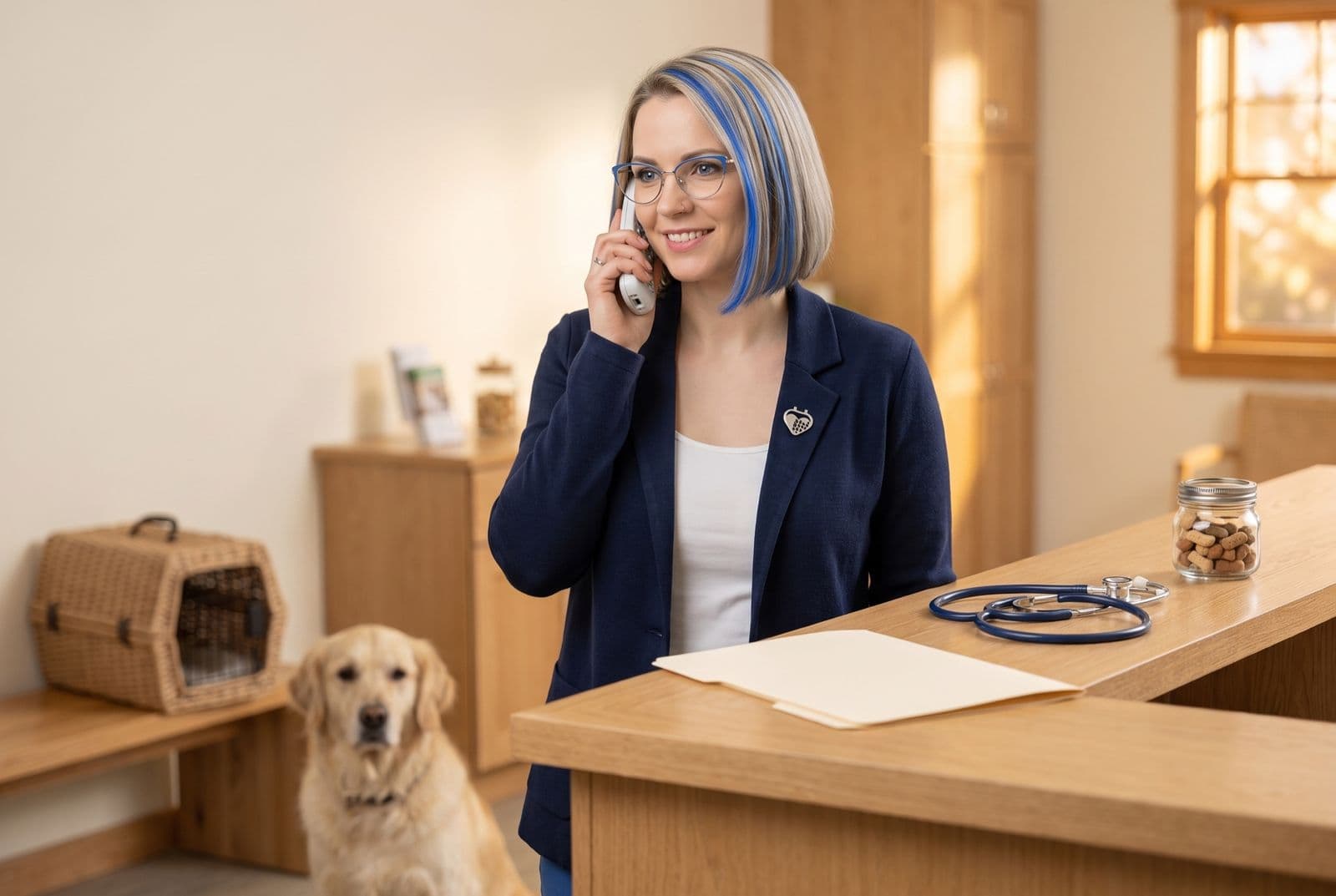
The management of a veterinary clinic is constantly modernising its medical care, yet the administrative side often remains a weak point. A phone that rings non-stop during a surgical procedure, or overlapping appointments, make for a tense working environment. Bringing in an AI receptionist for veterinary clinics is the strategic step by which practices can overcome these daily challenges and optimise their workflow.
Permanent availability and the ability to handle several requests at once turn reception into a process that is better organised, faster and easier to manage.
Which critical problems does an AI receptionist solve in a veterinary setting?
The work of a veterinary clinic can become hard to manage when phone calls coincide with appointments, receiving patients and administrative tasks. In busy periods some calls can go unanswered, and requests can be forgotten or processed late.
An AI receptionist for veterinary clinics can help to reduce these problems by automating communication and repetitive tasks. It can answer the usual requests, collect the necessary information and route requests to the clinic's staff when human intervention is needed.
The situations in which automation can be useful include:
- handling repetitive calls and requests;
- taking booking requests;
- providing basic information about the clinic's services;
- passing messages on to the medical or administrative team;
- handling requests outside opening hours;
- reducing the time staff spend on administrative work.
Reception can therefore run more consistently, including at times when staff are busy with patients.
The takeaway
appointments lost per week × 52 weeks
Katti takes the calls, not the cases. Example, with numbers chosen only to illustrate: 8 missed calls a week during procedures, half of which would have become appointments, come to 208 appointments a year.
Operational efficiency and fewer administrative errors
An AI receptionist for veterinary clinics can standardise certain processes and follow pre-set flows for collecting and passing on information. This helps to keep the working process more uniform and can reduce the reliance on manual intervention for every request.
Beyond taking calls, bringing in this technology eliminates human error in managing the diary. Overlapping appointments, missed vaccination reminders or lost contact details are reduced considerably. Choosing an AI receptionist solution for veterinary clinics transforms the way patients are received, offering owners a smooth experience and the whole medical staff an organised working atmosphere.
Automation does not replace the expertise of veterinary staff. Instead, it can take over repetitive administrative work, giving the team more time for direct interaction with owners and for caring for the animals.
By integrating an AI receptionist into the clinic's workflow, communication can become better organised, requests can be handled faster and administrative processes can be simplified.
Sign up, your booking page is live in minutes, and Katti takes the first call within one working day.
Work with KattiFrequently asked questions
Which critical problems does the AI receptionist solve in a veterinary clinic?
The solution eliminates the interruptions caused by constant phone calls during medical procedures or consultations. By taking the calls and the repetitive requests, the AI prevents requests from being overlooked in busy periods and offers assistance outside working hours too.
How does the AI assistant prevent administrative errors in the practice?
The system follows pre-set flows and automates diary management, considerably reducing human mistakes such as overlapping appointments, lost owner contact details or forgotten vaccination reminders.
Does the AI receptionist replace the medical or reception staff?
No, automation does not replace human expertise. The purpose of the AI receptionist is to take over routine administrative tasks, giving the medical team more time for the direct care of the animals and for personalised communication with their owners.